 Top-Quality Laser Cutting Service for Precise Results
Why Choose Our Laser Cutting Services for Precision and Quality?
Laser cutting is a revolutionary technology that has transformed modern manufacturing. This process uses a focused laser beam to cut, engrave, or mark a wide range of materials with extreme precision. Whether used in industries like automotive, electronics, or furniture manufacturing, laser cutting is a preferred choice due to its versatility, accuracy, and cost-efficiency.
What is Laser Cutting?
Laser cutting is a subtractive manufacturing process that uses a high-powered laser beam to precisely cut, shape, or engrave materials. By concentrating the laser’s energy onto a small area, the heat melts or vaporizes the material, creating clean cuts or intricate designs without physical contact. This precision has made laser cutting essential for industries where detail and finish are paramount.
How Does Laser Cutting Work?
The laser cutting process begins with a design file, typically in formats like CAD or vector graphics. This file guides the laser beam along the material, cutting or engraving as required. The process is controlled by a computer, allowing for high levels of customization and detail. Laser machines come in different types, such as CO2 lasers, fiber lasers, and diode lasers, each suited for specific materials and applications.
Advantages of Laser Cutting
Laser cutting offers several advantages over traditional cutting methods, including:
- Precision and Accuracy
Laser- cutting can produce extremely fine and intricate designs, making it ideal for detailed applications. The laser’s accuracy allows for precise cuts with tolerances as small as 0.001 inches, which is critical for components requiring exact dimensions. - Non-Contact Process
Unlike traditional cutting tools, laser- cutting does not physically touch the material, reducing wear on tools and minimizing the risk of contamination or warping. - Versatility
Laser -cutting is compatible with a broad range of materials, including metals, plastics, wood, and fabrics, making it highly versatile across different industries. - Efficiency and Speed
Laser- cutting is generally faster than traditional cutting methods, which reduces lead times and improves production efficiency. Additionally, complex shapes and designs can be produced quickly, increasing the output rate. - Eco-Friendly Option
Laser- cutting generates less waste than many other cutting methods, as it requires minimal material removal. Some laser systems are also designed to optimize energy consumption, contributing to a more sustainable manufacturing process.
Types of Materials for Laser Cutting
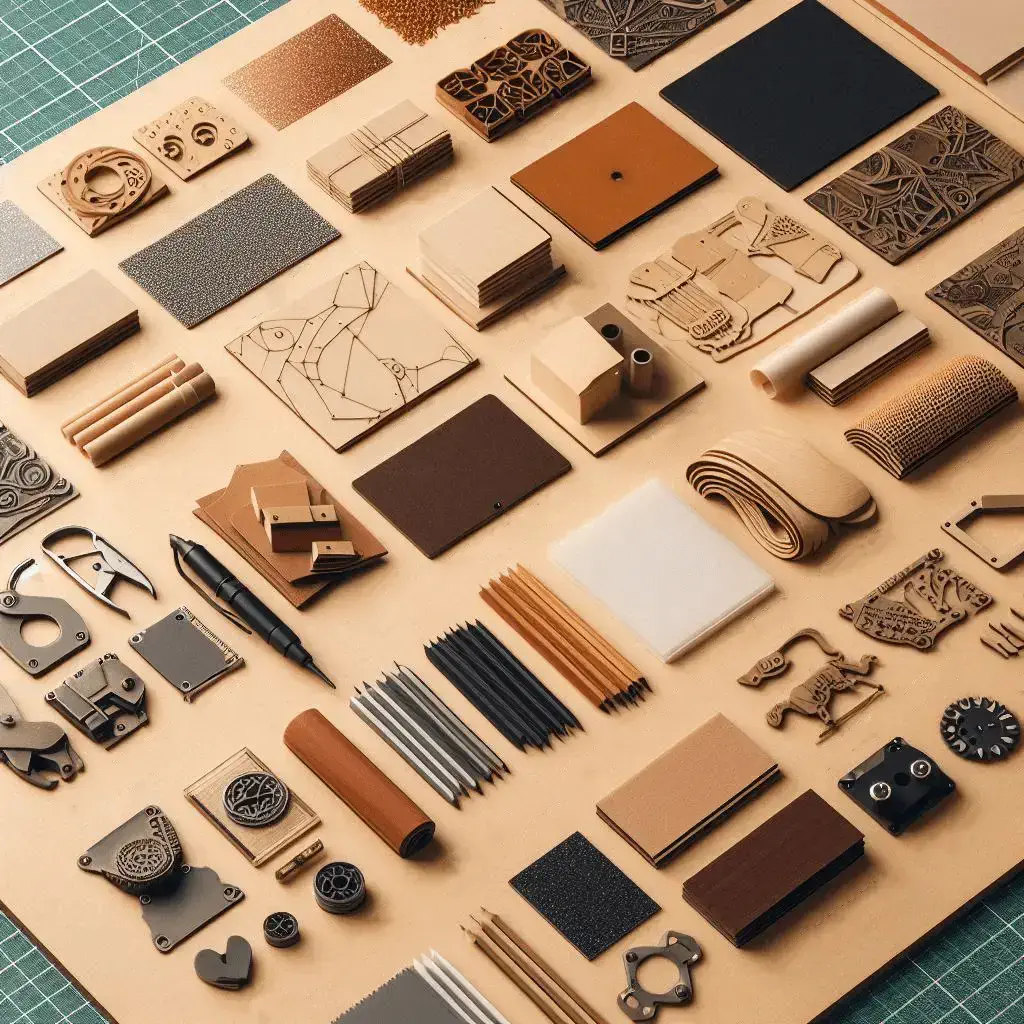
Laser cutting is suitable for various materials, including:
- Metals: Stainless steel, aluminum, brass, and titanium
- Non-metals: Acrylic, wood, leather, plastic, and fabric
- Specialty Materials: Laminates, rubber, and foam
Each material has specific parameters, like thickness and reflectivity, which may require adjustments to the laser settings. For instance, metal cutting may require a high-powered laser, while delicate materials like fabric need lower intensity.
Common Applications of Laser Cutting
Laser cutting is utilized across diverse industries due to its adaptability. Some common applications include:
- Automotive: Precision parts for engines, interior detailing, and metal components
- Construction & Decoration: Decorative panels, wall art, and architectural elements
- Advertising & Signage: Custom signs, letters, and logos
- Furniture Manufacturing: Intricate wood carvings, parts, and design elements
- Electronics: Circuit boards, casings, and other electronic components
Choosing the Right Laser Cutting Service
Selecting a reliable laser cutting service is essential for achieving high-quality results. Here are a few factors to consider:
- Experience and Expertise
Look for a provider with experience in your industry. An experienced team can advise on material choices and design adjustments to optimize the final product. - Equipment Quality
The quality of laser machines impacts the precision and finish of cuts. Check if the service provider uses advanced equipment for a consistent and precise output. - Customization Options
Many projects require custom specifications. Choose a service that offers flexibility to meet your design needs.
Frequently Asked Questions (FAQ)
- What materials can be cut with lasers?
Metals, plastics, wood, acrylic, and fabrics are just a few examples. The material’s thickness and properties affect laser compatibility. - What is the cost of laser cutting?
Pricing depends on factors like material, complexity, and quantity. Contact your provider for an accurate quote. - How long does a typical laser cutting project take?
Project timelines vary. Simple designs are often completed quickly, while intricate or large projects may take more time. - Is laser cutting safe?
Yes, laser- cutting is a safe, non-contact process. The cutting area is generally enclosed, protecting operators from laser exposure.
Laser cutting is an invaluable tool for industries that require precision, speed, and versatility. From intricate designs to high-volume production, laser- cutting offers benefits that are hard to achieve with traditional methods. Whether you need metal parts, custom signage, or delicate engravings, laser- cutting provides a solution that is both efficient and eco-friendly.
For businesses looking to elevate their manufacturing capabilities, investing in laser- cutting technology or finding a reliable laser- cutting service is a smart choice. As laser technology advances, its applications and benefits continue to expand, making it an indispensable part of modern manufacturing.