 Laser Cutting Stainless Steel: Proven Benefits for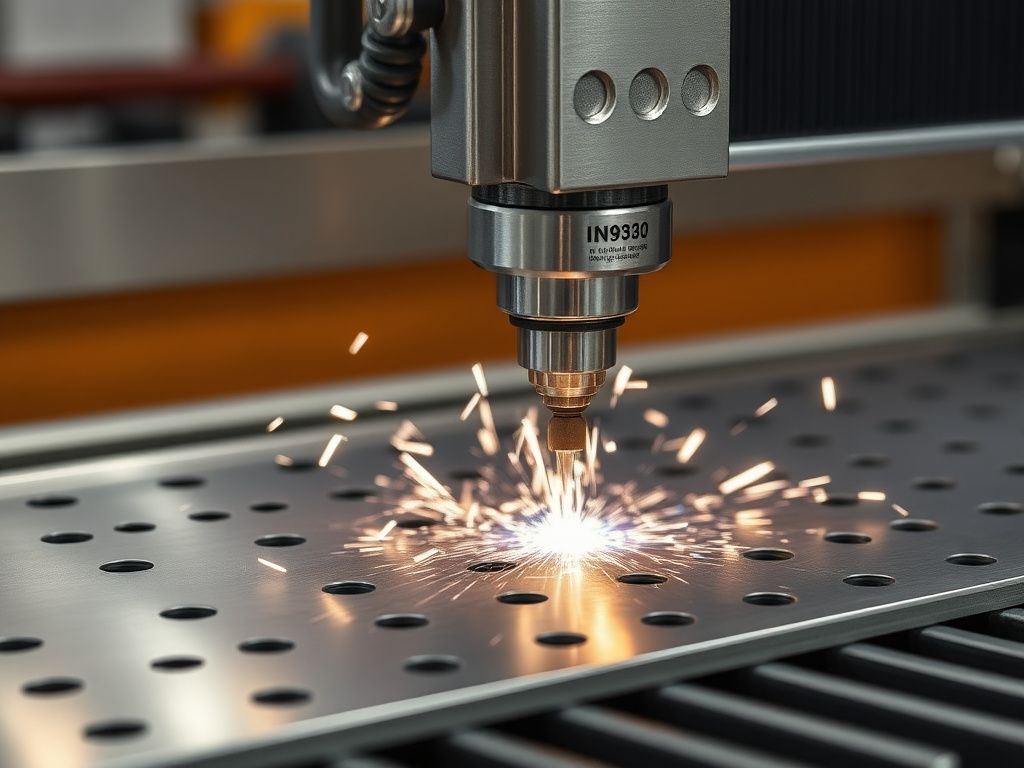
Laser Cutting Stainless Steel: A Game-Changer for Industrial Fabrication
laser cutting stainless steel has revolutionized industrial manufacturing, offering unmatched precision, speed, and versatility. In sectors ranging from automotive to aerospace, this technology enables manufacturers to produce complex components with tight tolerances, minimal waste, and superior edge quality. Unlike traditional methods like plasma or waterjet cutting, laser cutting delivers exceptional accuracy and repeatability, making it ideal for high-volume production and intricate designs. In this comprehensive guide, we explore the proven benefits of laser cutting stainless steel for industrial use and why it has become the preferred choice for modern fabrication.
Stainless steel is notoriously difficult to cut due to its hardness and heat resistance. However, modern fiber lasers have overcome these challenges, offering clean cuts without burrs or deformation. The process uses a high-power laser beam to melt or vaporize the material, assisted by a gas jet that removes molten metal and protects the cut edge from oxidation. This results in components that often require no secondary finishing, saving time and cost.
Industries that demand high-quality stainless steel parts—such as medical device manufacturing, food processing equipment, and architectural metalwork—have increasingly turned to laser cutting. The technology supports a wide range of stainless steel grades, including 304, 316, and 430, in thicknesses from thin foils up to 25 mm or more. Below, we delve into the specific advantages that make laser cutting stainless steel an extraordinary solution for industrial applications.
Unmatched Precision and Accuracy in Laser Cutting Stainless Steel
One of the most compelling benefits of laser cutting stainless steel is its exceptional precision. Modern laser systems can achieve tolerances as tight as ±0.1 mm, even on complex geometries. This level of accuracy is critical for industries like electronics, where components must fit together perfectly. Unlike mechanical cutting, lasers do not exert physical force on the material, eliminating the risk of distortion or warping. This is especially important when working with thin stainless steel sheets that are prone to bending under pressure.
How Laser Precision Reduces Waste
Precision directly translates into material savings. Because the laser kerf is extremely narrow—typically 0.1 to 0.3 mm—parts can be nested closely together on the sheet, maximizing material utilization. This is a significant advantage over traditional cutting methods that require wider kerfs and more spacing. For industrial operations processing large volumes of stainless steel, even a 5% improvement in material yield can result in substantial cost savings. Additionally, the accuracy of laser cutting minimizes the need for rework, further reducing waste and labor costs.
Consistency Across Production Runs
Laser cutting offers unparalleled repeatability. Once a program is created, the same part can be reproduced thousands of times with identical quality. This consistency is vital for industries that require interchangeable parts, such as automotive and aerospace. Laser cutting vs traditional mechanical cutting shows that lasers maintain accuracy even over long production runs, whereas mechanical tools wear down over time, leading to dimensional drift. For stainless steel components that must meet strict regulatory standards, laser cutting provides the reliability needed to pass inspections.
Speed and Efficiency: Accelerating Production with Laser Cutting Stainless Steel
In the fast-paced world of industrial manufacturing, speed is a key competitive factor. Laser cutting stainless steel is remarkably fast, especially when compared to traditional methods like sawing or milling. Modern fiber lasers can cut through 1 mm stainless steel at speeds exceeding 20 meters per minute. For thicker materials, the cutting speed remains impressive, often outperforming plasma or waterjet cutting. This high throughput allows manufacturers to meet tight deadlines and increase overall production capacity.
Reduced Setup and Changeover Times
Another efficiency gain comes from the minimal setup required for laser cutting. Unlike mechanical processes that need tool changes or fixture adjustments, laser cutting is software-driven. Changing from one part design to another can be done in seconds by loading a different CAD file. This flexibility is particularly beneficial for job shops that handle a variety of stainless steel parts in small batches. Laser cutting small batch production benefits are well-documented, as the technology eliminates the need for expensive tooling and reduces lead times dramatically.
Automation and Integration
Laser cutting systems can be easily integrated into automated production lines. With robotic loading and unloading, as well as automated nesting software, the entire process from material storage to finished parts can be streamlined. This reduces labor costs and human error, while increasing throughput. For industries that require just-in-time manufacturing, laser cutting stainless steel offers the agility to respond quickly to changing demands without sacrificing quality.
Cost-Effectiveness of Laser Cutting Stainless Steel for Industrial Use
While the initial investment in laser cutting equipment can be substantial, the long-term cost benefits are compelling. The technology reduces operational costs through lower energy consumption, minimal material waste, and reduced labor requirements. Additionally, because Laser-Cut parts often require no secondary finishing—such as deburring or grinding—the overall processing cost per part is lower.
Lower Operating Costs Compared to Traditional Methods
Fiber lasers, the most common type for cutting stainless steel, have high electrical efficiency (over 40%) and require less maintenance than CO2 lasers or plasma cutters. They also have a longer service life, often exceeding 100,000 hours of operation. Consumable costs are minimal, as the main wear items are protective lenses and nozzles. In contrast, plasma cutting requires frequent replacement of electrodes and nozzles, while waterjet cutting involves high costs for abrasive garnet and pump maintenance. Over time, these savings add up, making laser cutting the most economical choice for many industrial applications.
Reduced Rework and Scrap Rates
The precision and consistency of laser cutting directly reduce scrap rates. Fewer rejected parts mean less material wasted and lower costs for rework. For expensive stainless steel grades like 316L, which is used in corrosive environments, these savings can be significant. Moreover, the ability to produce complex shapes in a single operation eliminates the need for multiple setups, further reducing labor and handling costs. Laser cutting material usage optimization strategies can help companies maximize their return on investment.
Versatility in Design and Material Thickness
Laser cutting stainless steel is not limited to simple shapes. The technology can produce intricate patterns, sharp corners, and small holes that would be impossible or prohibitively expensive with mechanical methods. This design freedom allows engineers to create lightweight, high-strength components that optimize performance. For example, in the automotive industry, laser-cut stainless steel brackets and supports can be designed with complex cutouts to reduce weight without compromising structural integrity.
Wide Range of Thicknesses
Industrial laser cutters can handle stainless steel sheets from 0.5 mm to over 25 mm thick, depending on the laser power. Thinner materials are cut with exceptional speed and edge quality, while thicker plates can be cut with the help of high-power lasers (6 kW and above). This versatility means that a single machine can serve multiple applications, from delicate sensor components to heavy-duty structural parts. The ability to switch between thicknesses quickly, without retooling, enhances production flexibility.
Compatibility with Various Stainless Steel Grades
Different industrial applications require different stainless steel grades. Laser cutting works well with austenitic (304, 316), ferritic (430), and martensitic (410) stainless steels. Each grade has unique properties, such as corrosion resistance or hardness, and laser cutting can be optimized for each. For instance, cutting 316L stainless steel for marine environments may require different gas parameters than cutting 304 for kitchen equipment. Laser systems can store multiple cutting recipes, ensuring optimal quality across materials.
Superior Edge Quality and Minimal Heat-Affected Zone
When cutting stainless steel, edge quality is crucial for both aesthetic and functional reasons. Laser cutting produces a smooth, burr-free edge that often requires no secondary finishing. The heat-affected zone (HAZ) is very narrow—typically less than 0.1 mm—which preserves the material’s mechanical properties and corrosion resistance. This is particularly important for stainless steel parts used in medical or food processing applications, where surface integrity and hygiene are paramount.
Comparison with Plasma and Waterjet Cutting
Plasma cutting, while fast, tends to produce a wider HAZ and rougher edges that require grinding. Waterjet cutting, on the other hand, does not generate heat but is slower and more expensive due to abrasive costs. Laser cutting strikes an optimal balance: it is faster than waterjet, cleaner than plasma, and offers the best edge quality among thermal cutting methods. For stainless steel components that will be visible or require tight tolerances, laser cutting is the superior choice.
Gas Assistance for Improved Cut Quality
The use of assist gases—typically oxygen, nitrogen, or compressed air—plays a critical role in cut quality. For stainless steel, nitrogen is often preferred because it produces a clean, oxide-free edge that is ideal for welding or painting. Oxygen can be used for thicker materials to increase cutting speed, but it may leave a thin oxide layer. Gas assistance laser cutting techniques can be fine-tuned to achieve the desired edge finish and minimize dross formation.
Applications of Laser Cutting Stainless Steel Across Industries
The benefits of laser cutting stainless steel have led to its adoption in a wide range of industrial sectors. In the automotive industry, laser-cut stainless steel is used for exhaust systems, fuel tanks, and structural brackets. The aerospace sector relies on laser cutting for lightweight components that must withstand extreme conditions. Medical device manufacturers use laser-cut stainless steel for surgical instruments and implants, where precision and cleanliness are non-negotiable. Additionally, the food and beverage industry uses laser-cut stainless steel for processing equipment and storage tanks due to its corrosion resistance and ease of cleaning.
Architectural and Decorative Uses
Beyond functional applications, laser cutting stainless steel is also popular for architectural and decorative elements. Custom facades, railings, and interior panels often feature intricate laser-cut patterns that add aesthetic value while maintaining durability. The ability to cut complex designs without tooling makes it economical for unique, high-end projects. For example, laser-cut stainless steel screens are used in modern buildings to provide privacy while allowing light to pass through.
Prototyping and Customization
Rapid prototyping is another area where laser cutting excels. Because no hard tooling is required, design iterations can be tested quickly and inexpensively. This accelerates product development cycles, allowing companies to bring new products to market faster. For custom stainless steel parts, such as those used in specialized machinery, laser cutting offers the flexibility to produce one-off components without the setup costs associated with traditional manufacturing. Laser cutting furniture prototyping is a similar concept applied to furniture design, but the same principles apply to industrial components.
In conclusion, laser cutting stainless steel delivers proven benefits for industrial use: exceptional precision, high speed, cost efficiency, design versatility, superior edge quality, and broad applicability across industries. Whether you need high-volume production or custom prototypes, laser technology offers a reliable and scalable solution. To explore how laser cutting can Enhance Your manufacturing process, contact our team for a consultation or request a quote for your next project.