 Laser Cutting Furniture Prototyping: Accelerate Design
The Role of Laser Cutting in Furniture Prototyping
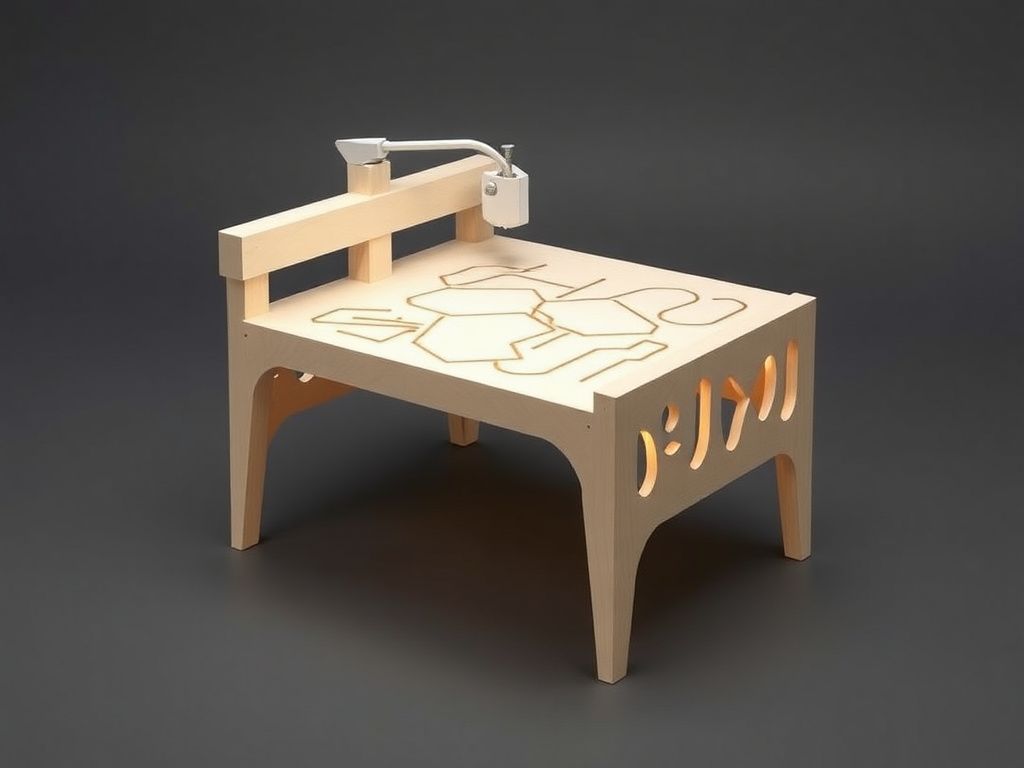
Laser Cutting Furniture Prototyping has become an indispensable tool for modern furniture manufacturers seeking to accelerate their design cycles. By enabling rapid iteration with minimal material waste, laser cutting allows designers to test forms, joinery, and ergonomics in hours rather than weeks. This technology bridges the gap between digital 3D models and physical prototypes with extraordinary precision.
Traditional prototyping methods often involve hand-crafting or CNC routing, which can be time-consuming and costly for complex geometries. Laser cutting eliminates many of these bottlenecks by directly translating vector files into cut pieces, ready for assembly. The result is a streamlined workflow that supports creativity and reduces time-to-market for new furniture collections.
How Laser Cutting Accelerates the Prototyping Workflow
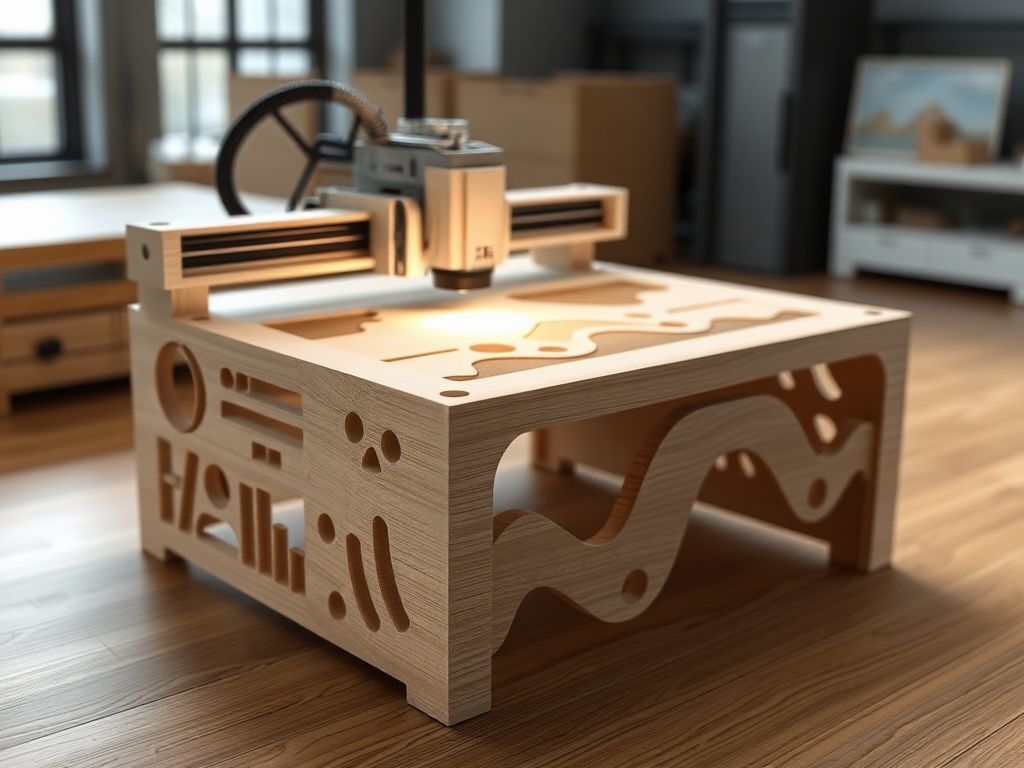
From Digital Model to Physical Part in Minutes
The process begins with a CAD design, which is exported as a vector file. Laser cutting furniture prototyping leverages this digital data to produce precise components without the need for tooling changes or manual adjustments. A laser cutter can process a variety of materials—plywood, MDF, acrylic, and even metal—allowing designers to choose the best substrate for each prototype iteration.
Because laser cutting is non-contact, there is no mechanical wear on tools, and the heat-affected zone is minimal. This ensures that intricate details and tight tolerances are maintained consistently across multiple copies. Designers can quickly produce several versions of a joint or a curve to evaluate aesthetics and structural performance.
Rapid Iteration and Design Validation
One of the most significant advantages of laser cutting furniture prototyping is the ability to iterate rapidly. A designer can modify a file and have a new prototype cut within the same day. This speed encourages experimentation with different wood thicknesses, joint types, and decorative patterns without the fear of excessive cost or delay.
For example, testing the fit of a laser-cut joint for flat-pack furniture can be done repeatedly until the assembly is intuitive and sturdy. Such iterative validation is crucial for ensuring that the final product meets both aesthetic and functional requirements.
Precision and Material Versatility in Prototyping
High Accuracy for Complex Geometries
Laser cutting offers unparalleled precision, with kerf widths as narrow as 0.1 mm depending on the material and laser settings. This level of accuracy is essential when prototyping furniture that requires tight-fitting joinery, such as dovetails or finger joints. Designers can rely on the laser to reproduce their digital designs exactly, eliminating the guesswork of manual cutting.
Understanding kerf width in laser cutting is critical for achieving the desired fit. By accounting for the material removed during cutting, designers can adjust their files to ensure parts snap together perfectly. This attention to detail is what makes laser-cut prototypes reliable indicators of how the final product will perform.
Exploring Different Materials Without Retooling
Another benefit of laser cutting furniture prototyping is the ease of switching between materials. A single laser cutter can process wood, acrylic, cardboard, and even thin metals like aluminum or steel. This flexibility allows designers to prototype a chair in corrugated cardboard for ergonomic testing, then move to plywood for structural validation, and finally to solid wood for the final look—all on the same machine.
For metal furniture frames, laser cutting provides clean edges and minimal distortion, which is essential for welding and assembly. The ability to prototype in the actual production material ensures that the transition from prototype to manufacturing is seamless.
Cost and Time Savings Compared to Traditional Methods
Reduced Tooling and Setup Costs
Traditional prototyping often requires custom molds, jigs, or CNC programming that can take days to set up. Laser cutting eliminates most of these upfront costs because the laser path is generated directly from the design file. There are no physical tools to create or change, making it economical for even single-piece prototypes.
This cost efficiency is particularly valuable for small studios and independent designers who need to validate concepts before investing in large-scale production. By using laser cutting for prototyping, they can allocate more budget to materials and finishing rather than tooling.
Faster Turnaround from Concept to Market
Speed is a competitive advantage in the furniture industry. Laser cutting furniture prototyping reduces the time from initial sketch to a physical model from weeks to days. This acceleration allows companies to respond quickly to market trends, test new Designs with focus groups, and refine products before committing to mass production.
Moreover, laser cutting supports small-batch production runs that can serve as limited-edition prototypes or pre-sale samples. This approach is discussed in detail in our article on laser cutting for small batch production, which highlights how the same technology used for prototyping can seamlessly transition to low-volume manufacturing.
Integration with Digital Design Tools
Seamless Workflow from CAD to Laser
Modern laser cutters accept standard vector formats such as DXF, AI, and SVG, making them compatible with popular design software like AutoCAD, SolidWorks, and Fusion 360. This integration means that any change in the digital model can be instantly reflected in the cut file, enabling a truly agile development process.
Designers can also incorporate parametric features that automatically adjust joint clearances based on material thickness. This level of automation reduces human error and ensures that each prototype iteration is consistent with the previous one.
Enhancing Design Complexity Without Extra Cost
Laser cutting does not penalize complexity. Intricate patterns, curved cuts, and small holes are all processed at the same speed as simple straight lines. This encourages designers to explore more elaborate forms, such as organic shapes or decorative cutouts, that would be prohibitively expensive with traditional methods.
For instance, incorporating laser-cut patterns into a prototype can give a preview of how laser patterns on wood furniture will look in the final product. This ability to test aesthetic details early in the design process is a powerful advantage.
Sustainability Benefits of Laser Prototyping
Minimal Material Waste
Laser cutting is an additive process in the sense that it removes only the material along the cut path. Nesting software can optimize the arrangement of parts on a sheet to maximize material utilization, often achieving over 90% efficiency. This is especially important during prototyping, where multiple iterations can generate significant waste if not managed carefully.
By reducing scrap, laser cutting furniture prototyping aligns with sustainable design principles. Designers can also prototype with recycled or reclaimed materials, further lowering the environmental footprint.
Eliminating Hazardous Chemicals
Unlike some traditional prototyping methods that involve adhesives, solvents, or chemical etching, laser cutting is a dry process. For most materials, the only byproduct is a fine dust or vapor that can be filtered. This creates a safer working environment and reduces the need for hazardous waste disposal.
For more insights on eco-friendly approaches, see our article on sustainable furniture design with laser cuts.
Overcoming Common Challenges in Laser Prototyping
Material Limitations and Edge Quality
While laser cutting is versatile, not all materials are suitable. Some plastics emit toxic fumes, and certain woods may have resins that cause excessive charring. Designers must select materials that laser cut cleanly and safely. Additionally, the cut edge may have a slight burn mark or rough texture, which can be sanded or finished if the prototype needs to look like the final product.
Understanding factors that affect laser cutting precision helps in mitigating these issues. Adjusting power, speed, and focus can improve edge quality and reduce post-processing.
Scaling from Prototype to Production
One challenge is ensuring that a prototype made with laser cutting can be scaled to mass production using the same or different methods. Laser cutting itself is well-suited for small to medium runs, but for very high volumes, other processes like stamping or injection molding may be more economical. However, the prototype serves as a proof of concept, and the design can be adapted for the final production method.
By using laser cutting for prototyping, manufacturers can validate the design’s feasibility and make informed decisions about production scaling.
Embrace laser cutting furniture prototyping to transform your design process. Whether you are a seasoned manufacturer or an emerging designer, this technology offers the speed, precision, and flexibility needed to bring innovative furniture to market faster than ever before. Start your next project with laser cutting and experience the difference.